



Some people say that Amazon censors and delists books…
Their company Twitch has problems, censors, has issues…
Others mention their $1.2 Billion dollar contract with Google, and the Israeli government & military.
Or alleged human rights issues.
Whatever moral reason you may have to dislike Amazon…
At some point I realized that I can’t “boycott” everything. To make any change, I need to have power.
Until then, complaining doesn’t work.
It’s a dark world. Let’s recognize how we can profit off of it.
And If you don’t like that, I hope you enjoy staying poor and living like a hermit… while we create the future.
Turns out Amazon doesn’t even hide its investments.
They announce them.
Through press releases, fund websites, portfolio pages - the Alexa Fund, the Climate Pledge Fund, the Industrial Innovation Fund all publish their holdings publicly. When Amazon backs a company, they often want you to know. The information isn’t buried in regulatory filings or locked behind a terminal. It’s sitting on aboutamazon.com, posted the same day the deal closes.
The problem isn’t access. It’s that most people see the headline, move on, and never connect the dots to what this actually signals.
Amazon doesn’t make investments for financial reasons. They make them for operational ones. When they write a check into a company, it’s almost always because they need that company to exist; to move their packages, fly their cargo, power their data centers. That changes the risk profile of every position in the portfolio entirely.
Don’t forget that 65% of the US economy is B2B.
So rather than of analyzing at companies as an individual entity, analyze each company as an imbricated node in a network of supply chains.
These are some nodes in Amazon’s network, and how you can copy this strategy:
1. Rivian Automotive (RIVN) — The One That Defines the Strategy
Amazon announced its Rivian investment in 2019 alongside a purchase agreement for 100,000 electric delivery vans. Both happened simultaneously, Because they were the same decision. Amazon needed electric delivery infrastructure and Rivian was the best bet to build it.
Today Amazon holds 158 million shares, about 17% of the company - worth roughly $2.18 billion. That’s 88% of their entire disclosed equity portfolio in one stock.
The public narrative on Rivian is grim. IPO’d at $78 in 2021, hit $172, now trades around $15. But Amazon’s cost basis sits around $8–9 per share from their pre-IPO rounds. They’re still profitable on paper. Retail investors who chased the IPO hype absorbed the crash. Investors who tracked the original 2019 announcement and bought in the post-collapse range ended up in a very different place.
The current setup is more interesting than the stock price suggests. Rivian just announced a $1.25 billion robotaxi deal with Uber. Their Volkswagen joint venture passed winter testing milestones. Gross profit turned positive in Q4 2024 for the first time in company history.
Amazon is not selling. They need the vans. This isn’t financial advice though, but Uber & Amazon aren’t going away anytime soon.

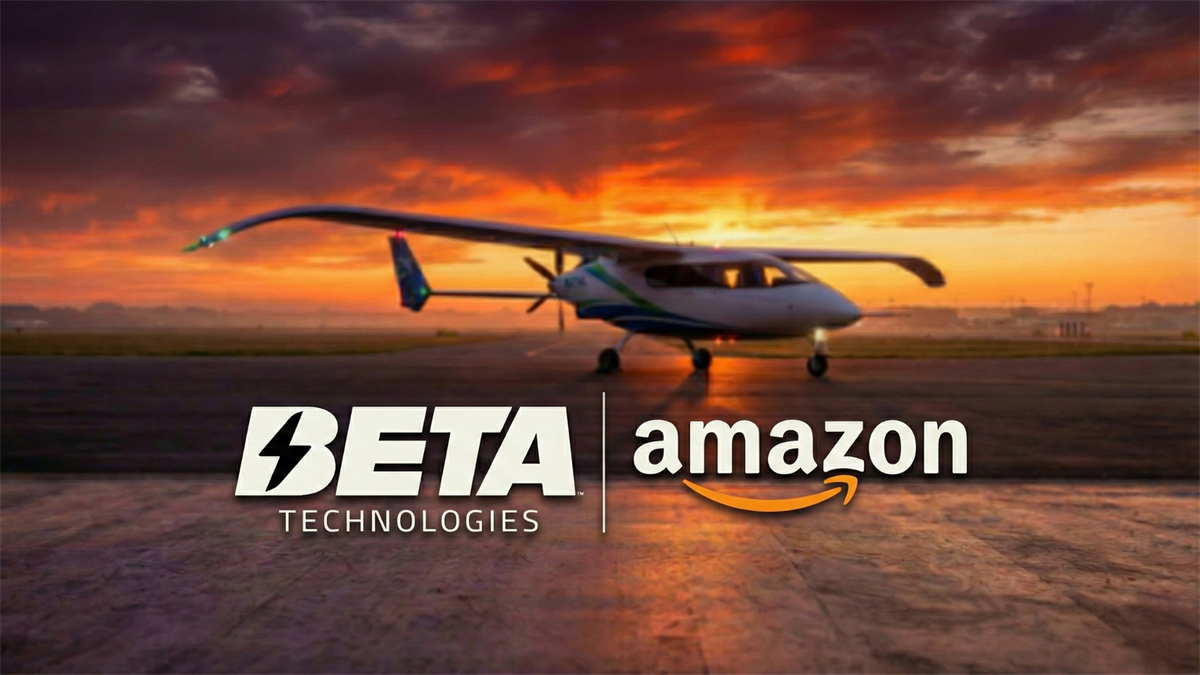
2. BETA Technologies (BETA) (yes, that’s the real name)
It’s not just Amazon working with them.
The Department of Defense (now department of war)
UPS
United Therapeutics
AND Amazon have huge contracts with them.
So after Amazon has been publicly building their relationship with BETA for years, until one day they announced a huge investment.
The thing is, this is pre-IPO. Hopefully at least some of you have the capital to do that, but this is what you do post-IPO:
Don’t just fall for the hype.
Amazon paid roughly $28 per share. BETA now trades around $15. That’s an unrealized loss of approximately $155 million in just a few months… BUT
BETA has $1.71 billion in cash, FAA certification milestones tracking for H1 2026. Amazon’s interest is obvious: electric short-haul air cargo is the logical next frontier after electric ground delivery.
The investment logic is identical to Rivian in 2019, one category later.
If Amazon’s average cost is $28, buying below that means entering at a better price than one of the world’s most sophisticated logistics operators got in at. The thesis is long. But the entry point has become genuinely compelling since the news broke.
I hate the concept, and I think A LOT of people don’t like the idea of random drones flying above us 24/7, but once they get approved their stock is going crazy.
The future of the company (and it’s potential) seems contingent on its pending regulations, which is what Amazon is betting on…
3. Air Transport Services Group (ATSG), the missed Jackpot
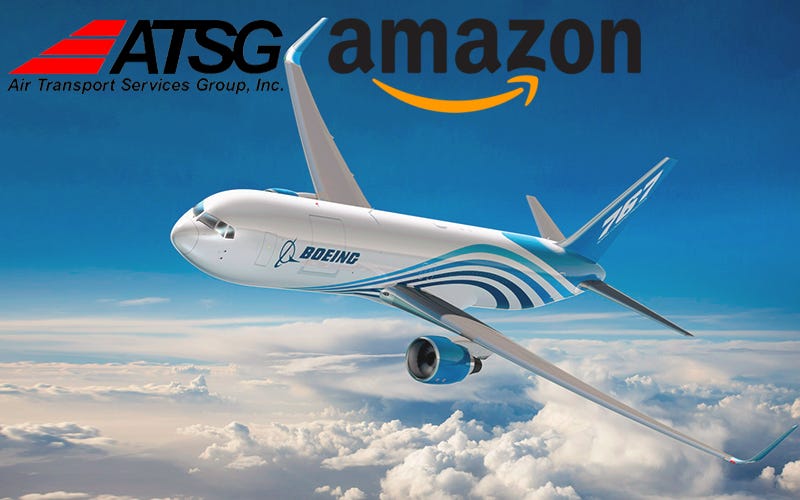
Amazon publicly announced its ATSG relationship years before the equity stake became widely discussed Prime Air cargo was always presented as an Amazon-ATSG partnership. The equity component was disclosed through regulatory filings over time, eventually revealing a 19.4% stake.
Not only Amazon worked with them.
DHL
Department of Defense (notice a pattern?)
UPS
ATSG operated Amazon’s cargo fleet. Amazon was the anchor customer. In April 2025, infrastructure firm Stonepeak acquired ATSG in an all-cash deal at $22.50 per share, paying out Amazon’s position at roughly $286 million: a significant return over their estimated entry in mid-$10s.
The trade is closed, and we missed out. Once you see companies as the complex imbricated networks they are, it’s easy to spot the next one.
ATSG was the template. Rivian and BETA are the current versions of it.
4. Astera Labs (ALAB): The AI Infrastructure Play That Already Ran
Not only Amazon.
NVIDIA
AMD
Intel
TSMC
Are all partnered with Astera. See the pattern?
Their relationship with AWS was publicly documented before the IPO; Amazon’s warrant position converted to equity when Astera went public in March 2024 at $36.
The stock hit $262 in late 2025. It now trades around $112 after a broad semiconductor correction.
The business meanwhile posted 92% year-over-year revenue growth in Q4 2025 with 75% gross margins.
Amazon’s customer relationship with Astera is not going to deteriorate. Their infrastructure capex is expanding. The equity stake is confirmation of something the commercial relationship already told you.
5. Marvell Technology (MRVL) - The Quiet Custom Silicon Relationship
The stock trades around $94, up from an estimated entry around $50, range-bound between $80 and $100 through early 2026 after a strong 2025 run.
I don’t feel like writing the rest of this out, you get the point. Amazon told us they would invest in them, paid them money for their services, then stock went up.
It’s not rocket science.
The Pattern
Four of Amazon’s five biggest positions follow the same logic: identify an operational dependency, back the best company solving it, hold equity as both a financial position and a supply chain guarantee.
How do you make money? Look at the role of the company in its larger network - will it be around in 5 years? Do other companies depend on it?
But don’t buy IPO hype, that’s how you get killed in the market.
Even though Amazon is net green (by a lot, obviously) there are a lot of smaller losers too. Do your own research.
The framework: follow the equity stake when there’s an operating relationship underneath it.
The announcements are public. The partnerships are documented. The portfolio pages are updated regularly. Most people read the headline and move on.
This is your FUTURE. Your success is not guaranteed. Statistically, most people are average. You should be terrified of the chance of you failing. Spend the time, pain, money, do the risk, anything it takes to figure it out properly.
Not financial advice though. Do your own research.